Case Study · Mayo Clinic · 2025

Ella — AI Clinical
Documentation

Reducing physician burnout in oncology through human-in-the-loop AI that assists — never replaces — clinical judgment.

My Role
Lead UX Research & Interaction Design
Timeline
Aug – Dec 2025 · 4–5 months
Platform
Desktop (EHR-integrated)
Team
5 Designers · Cross-functional
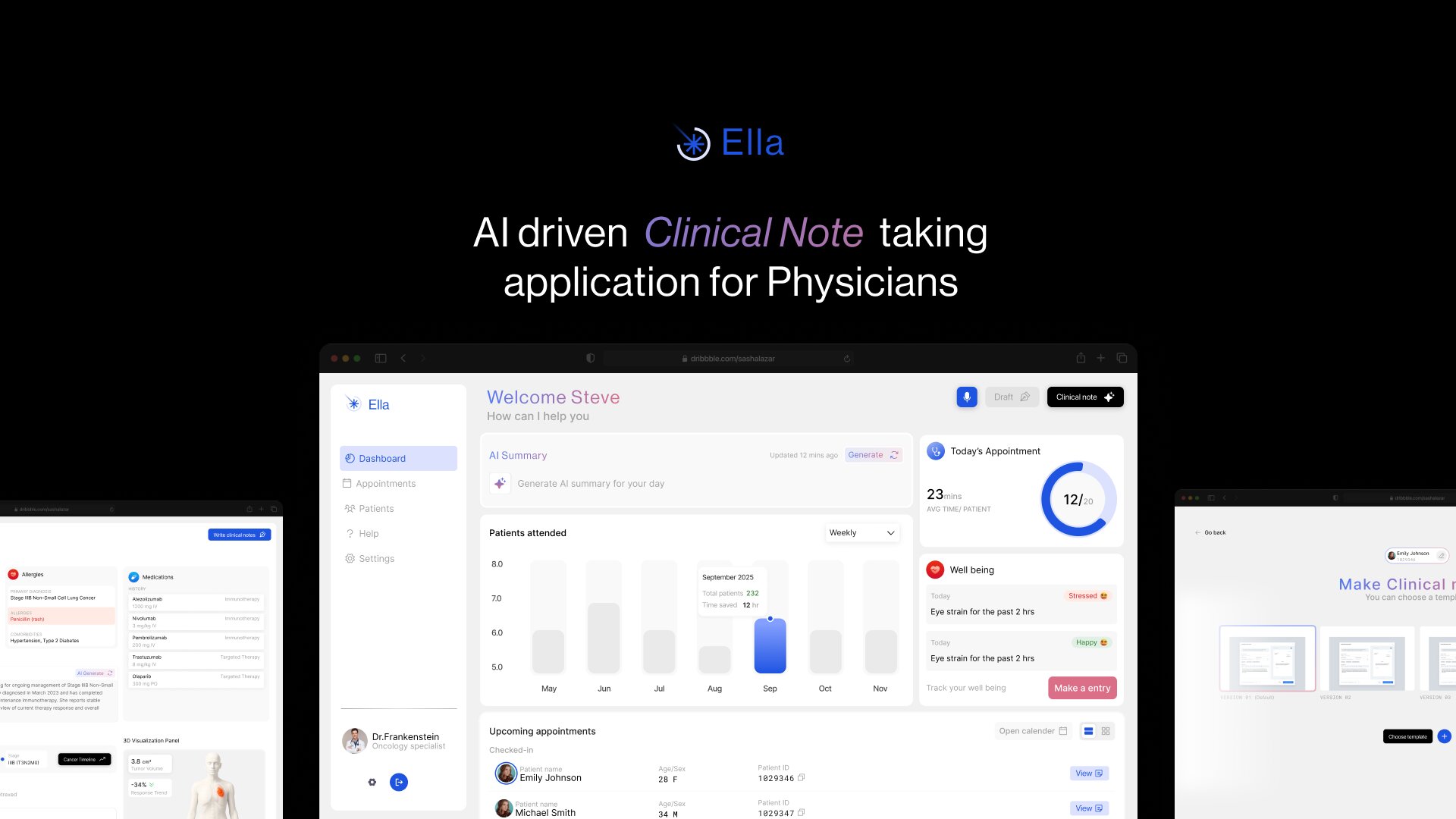
Ella dashboard — AI clinical documentation system
Overview

30% Less Charting Time by Automating Longitudinal Cancer Histories

Ella is an AI-powered clinical documentation product built for oncology, where patient histories span years of treatments, labs, scans, and decisions. The project focused on reducing physician documentation time while improving note quality and continuity of care. Ella assists — never replaces — clinical judgment, ensuring efficiency without compromising control.

30%
Reduction in physician charting time
60→85%
User satisfaction after iterative testing with 12 clinicians
24
Usability issues identified across 3 critical task flows
Problem

Physicians spend nearly half their day on documentation — not patients

Oncologists spend hours manually piecing together fragmented patient histories for every visit, leading to burnout, delayed documentation, and reduced time with patients. Existing EHR workflows are not designed for longitudinal cancer care. Research shows physicians spend 48% of their workday on administrative tasks — almost twice the time they spend with patients (26%).

🗂️
Info Fragmentation
Data scattered across EHR modules and external systems with no unified view
📋
Long History Complexity
Cancer care histories span hundreds of pages per patient across years
⏱️
Time Burden
Excessive time spent typing notes, often after clinic hours into evenings
👁️
Screen-Focused Care
Typing during visits reduces eye contact and meaningful patient interaction
😔
Documentation Fatigue
Repetitive entry, copy-paste errors, and generic notes compound over time
🧠
Cognitive Overload
Balancing active listening, clinical decisions, and live documentation simultaneously
Research Findings

The data made the case clear

LM-assisted documentation significantly improves efficiency and accuracy across clinical settings. We conducted stakeholder interviews with physicians to identify key pain points and validate our approach before any design work began.


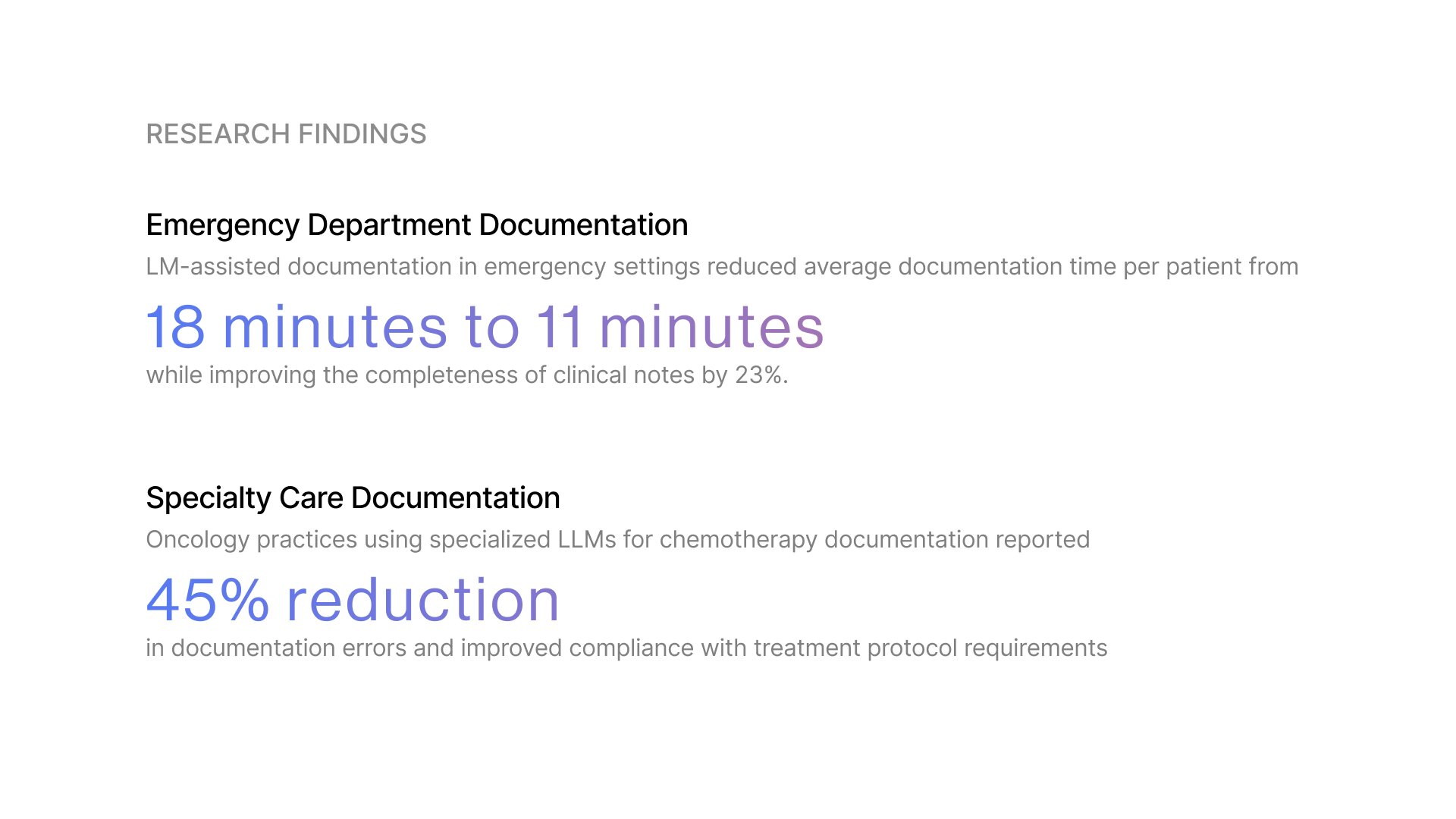
In emergency departments, AI-assisted documentation reduced average documentation time per patient from 18 minutes to 11 minutes while improving the completeness of clinical notes by 23%.


In oncology specifically, specialized LLMs for chemotherapy documentation led to a 45% reduction in documentation errors and improved compliance with treatment protocol requirements.
Research findings — documentation time reduction
Design Process

From paper to production

Our process moved from rapid sketching through structured wireframes to a full brand system — all grounded in clinician feedback at every stage.
01
Paper Wireframes
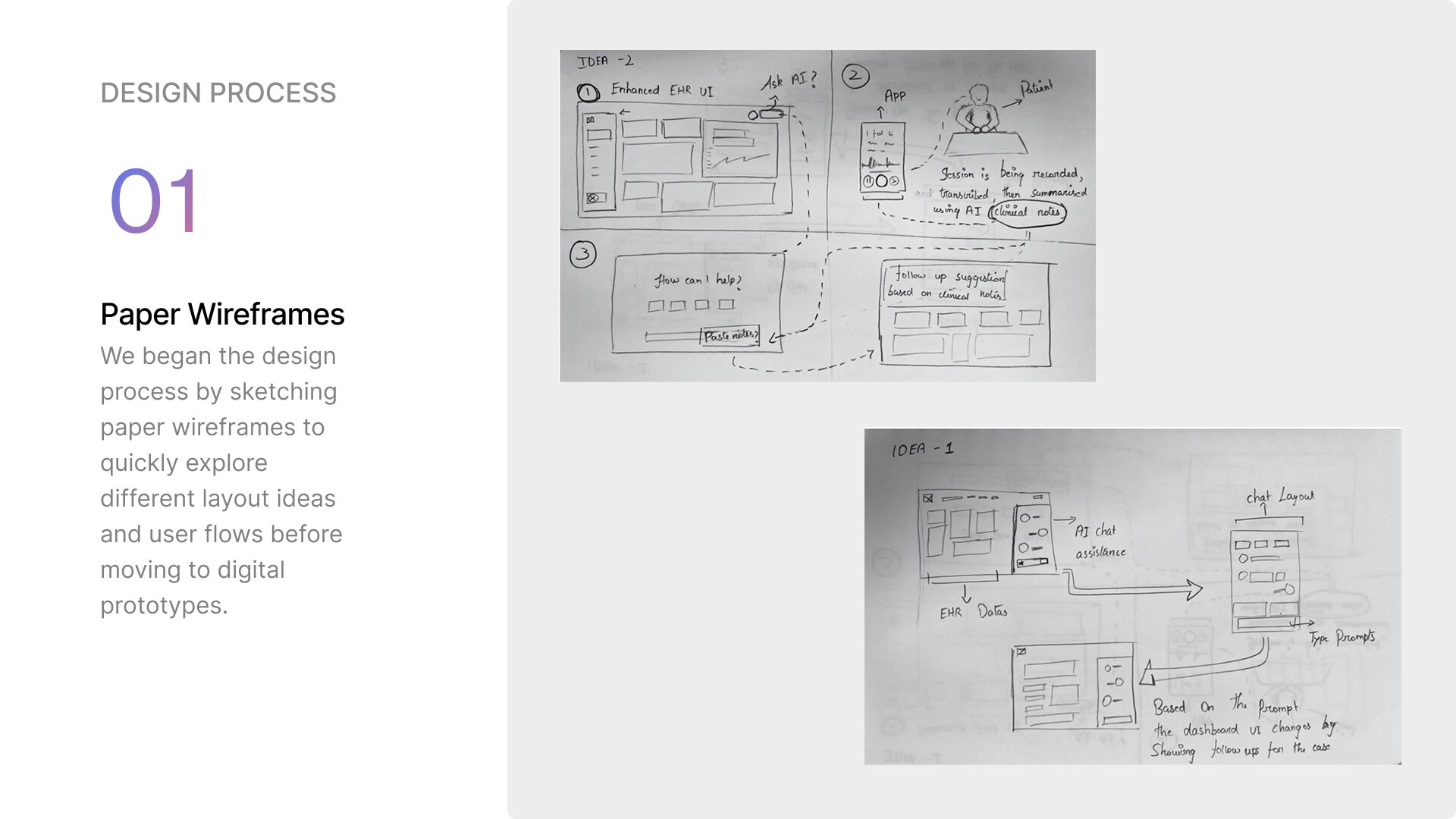
We began by sketching paper wireframes to quickly explore different layout ideas and user flows before committing to any digital direction. Speed and divergence were the goals — not fidelity.
Paper wireframes
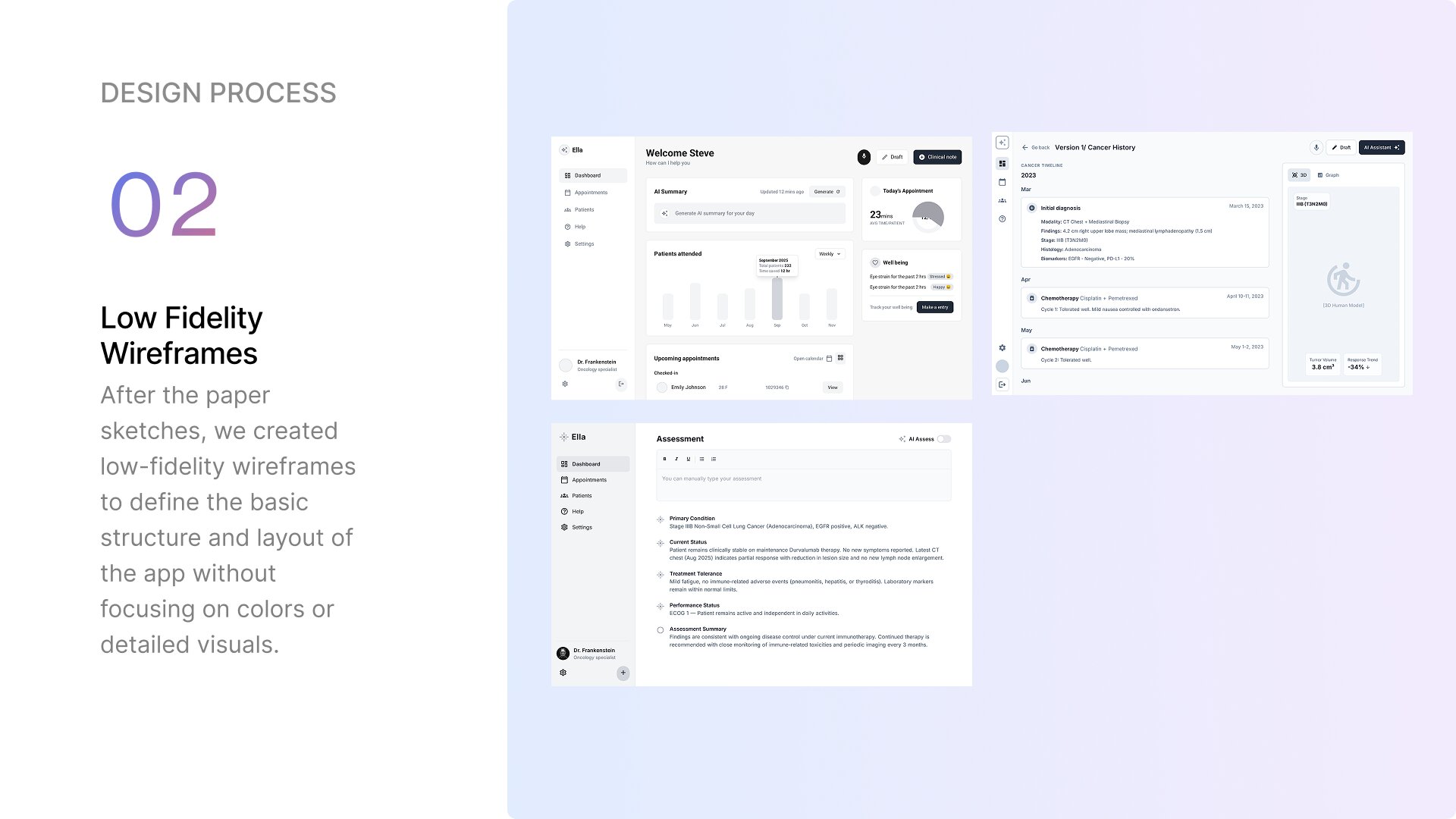
02
Low-Fidelity Wireframes
After the paper sketches, we created lo-fi wireframes to define the basic structure and layout of the app — information hierarchy, key flows, and interaction patterns — without any visual noise.
Low fidelity wireframes
03
Brand Guide
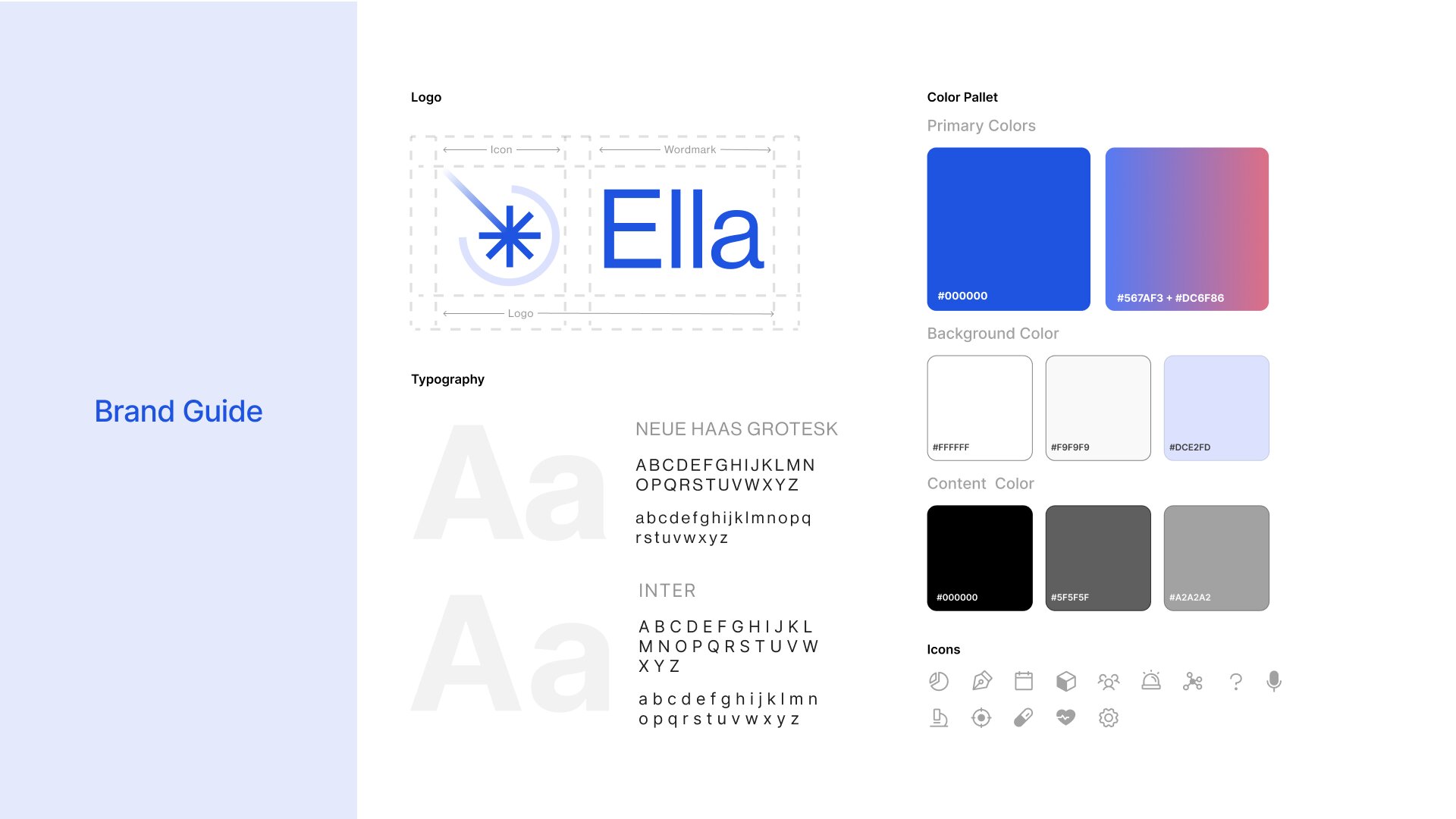
We established Ella's visual identity — Neue Haas Grotesk + Inter, a blue-to-purple gradient primary palette, and a comprehensive icon set designed for clinical density without visual fatigue.
Brand guide — colors, typography, icons
Proposed Features

Four systems. One goal: give time back.

Feature 01
AI-Incorporated Summarization
Provides real-time summaries of patient information for quicker decision-making. Physicians can generate a full AI summary for their day with a single tap — saving hours of manual review before rounds.
Feature 02
Pre-Charting of the Patient
Allows pre-visit preparation with patient history and AI-suggested notes. Clinicians arrive at each appointment already oriented — reducing cognitive load and improving the quality of the patient interaction.
Feature 03
In-Depth Clinical History Analysis
Deep longitudinal patient history — treatments, labs, scans, and decisions across years — surfaced intelligently so oncologists can understand the full picture without digging through hundreds of pages.
Feature 04
AI-Based Clinical Notes
Automatically generates structured clinical notes from the session, which physicians can review, modify, and approve. AI-generated content is always editable — maintaining physician authority and HIPAA compliance.
We Pitched It

Presenting to Mayo Clinic stakeholders

We presented Ella to Mayo Clinic physicians and faculty at Arizona State University — walking through our research findings, design decisions, and the rationale behind every interaction pattern.
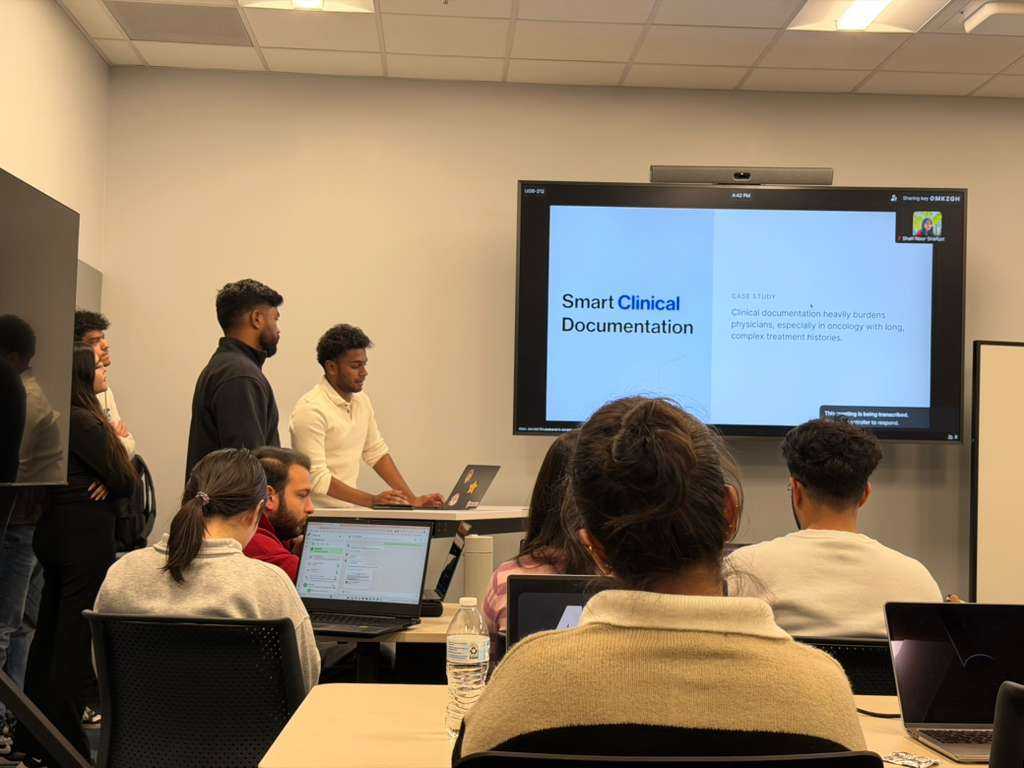
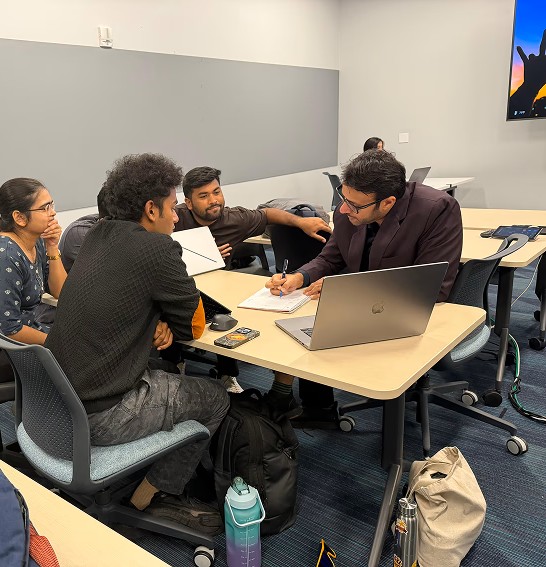
Yash presenting Ella at ASU Team collaboration session
Outcome

What I learned

"Rather than simply automating note-writing, we focused on synthesizing longitudinal histories, reducing cognitive load, and keeping clinicians in control."

This project challenged me to design for one of the most complex documentation environments in healthcare. The result was a 30% reduction in charting time and a system that feels assistive — not intrusive. It strengthened my ability to design AI-powered tools that align with real-world clinical workflows, navigate HIPAA constraints, and build trust with professional users who are rightfully skeptical of automation.

WCAG
2.2 AA
Full accessibility compliance across all shipped components
25%
Reduction in developer handoff time via dev-ready specs
12
Clinicians tested across 3 critical task flows in 2 sprints